
Have you ever been asked to do ETL testing and felt confused? You’re not alone. Many testers wonder whether it’s functional or non-functional and what it involves. This guide will help you understand ETL testing, why it’s important, and how to do it effectively.
What is ETL Testing?
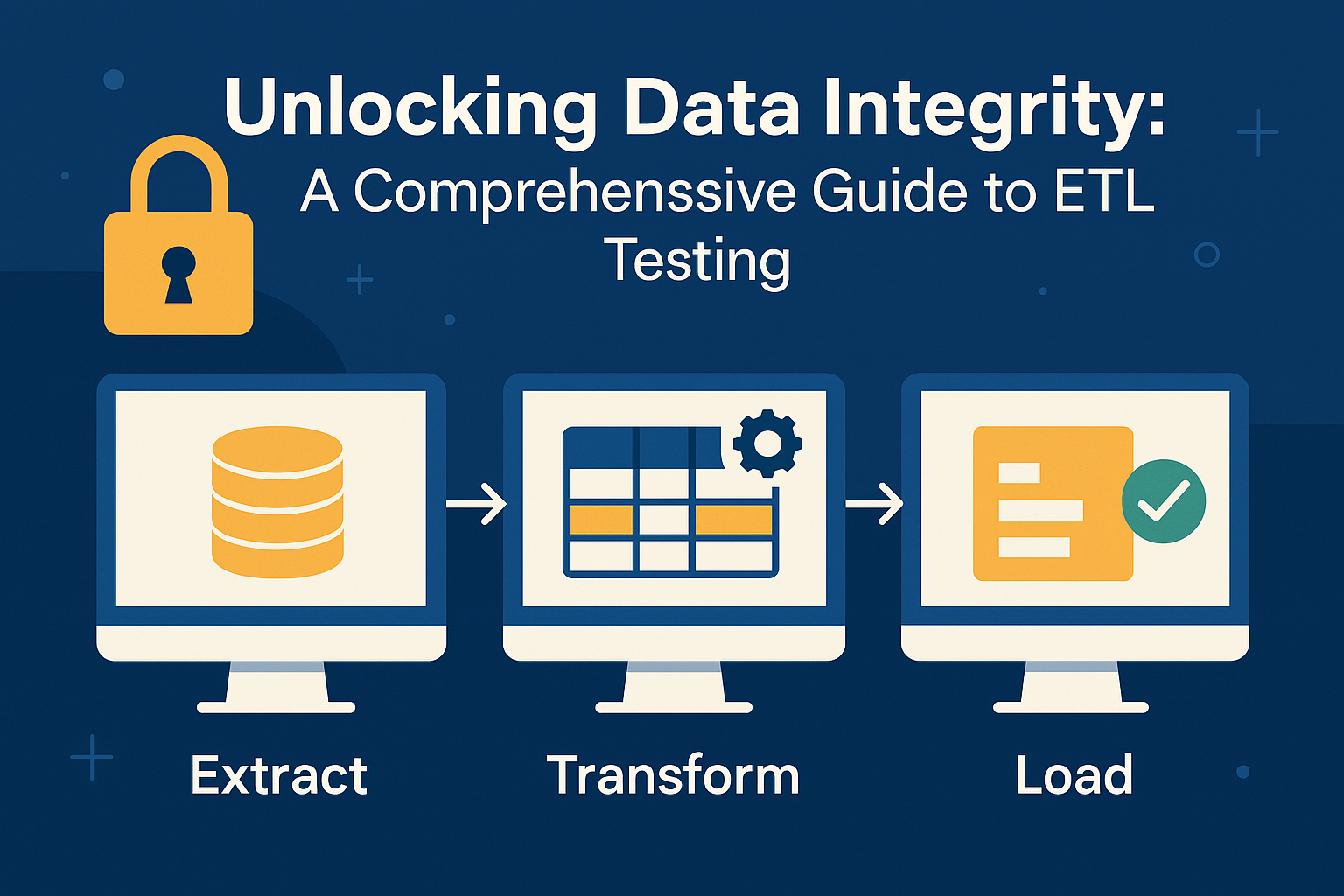
ETL stands for Extract, Transform, and Load. ETL testing makes sure that data moves correctly from one place to another. The goal is to ensure that data is:
- Extracted correctly from the source.
- Transformed according to business rules.
- Loaded properly into the target system.
In simple terms, ETL testing checks the entire data journey to make sure everything works as it should.
A Real-World Example: The Retail Company
Imagine a big retail company like OmniMart that collects sales data from hundreds of stores. Each store has its own database, and the company needs to combine this information into one central database for reporting. Here’s how ETL works:
- Extract: Sales data is taken from each store’s database.
- Transform: The data is cleaned and standardized. For example, different date formats are made consistent.
- Load: The cleaned data is loaded into the central database.
ETL testing checks that no data is missed or duplicated, transformations are accurate, and everything is loaded correctly.
ETL vs. Application Testing
ETL testing is different from typical application testing. While application testing checks if a function works (like adding a product to a shopping cart), ETL testing ensures that all sales data from that shopping cart is correctly moved to the reporting system.
Why is ETL Testing Important?
Just like any software, ETL processes need testing to ensure they work correctly. Errors in ETL can lead to incorrect data, affecting business decisions.
A Critical Example: The Healthcare Industry
Consider a healthcare system that collects patient data from multiple hospitals. If the ETL process mismatches records or transforms data incorrectly, it could lead to wrong diagnoses or billing errors. Accurate data handling is crucial.
Effective ETL testing prevents these issues by:
- Ensuring the ETL code works correctly.
- Identifying data issues early, saving time and money.
Challenges of ETL Testing
ETL testing comes with unique challenges:
- No User Interface (UI): ETL processes run in the background, making it hard to see problems.
- Massive Data Volumes: Handling millions of records daily is a significant challenge.
- Complex Comparisons: Testers must verify that the output matches the expected result after transformation.
- Hidden Defects: Errors may not be obvious and often require detailed data comparison.
How to Do ETL Testing: A Step-by-Step Approach
ETL testing is usually done using a black-box testing approach, focusing on inputs and outputs.
Example: A Bank’s ETL Process
- Execute the ETL Process: Run the ETL job to extract, transform, and load transaction data.
- Compare Output Data: Check the data in the warehouse against expected results.
- Determine Quality: If the data matches, the test passes. If not, the process needs fixing.
Manual Testing vs. ETL Testing
Manual testing focuses on an application’s functionality and user interface, while ETL testing focuses on validating data flow and integrity in the back-end process.
Conclusion
ETL testing is essential for ensuring data integrity. By understanding the core principles of Extract, Transform, and Load, recognizing its challenges, and applying a methodical testing approach, you can ensure that data is accurate and reliable. Next time you’re asked to do ETL testing, you’ll be ready to make a significant impact.
Explore More
Join our courses on Data Warehouse to explore more, in depth knowledge for ETL